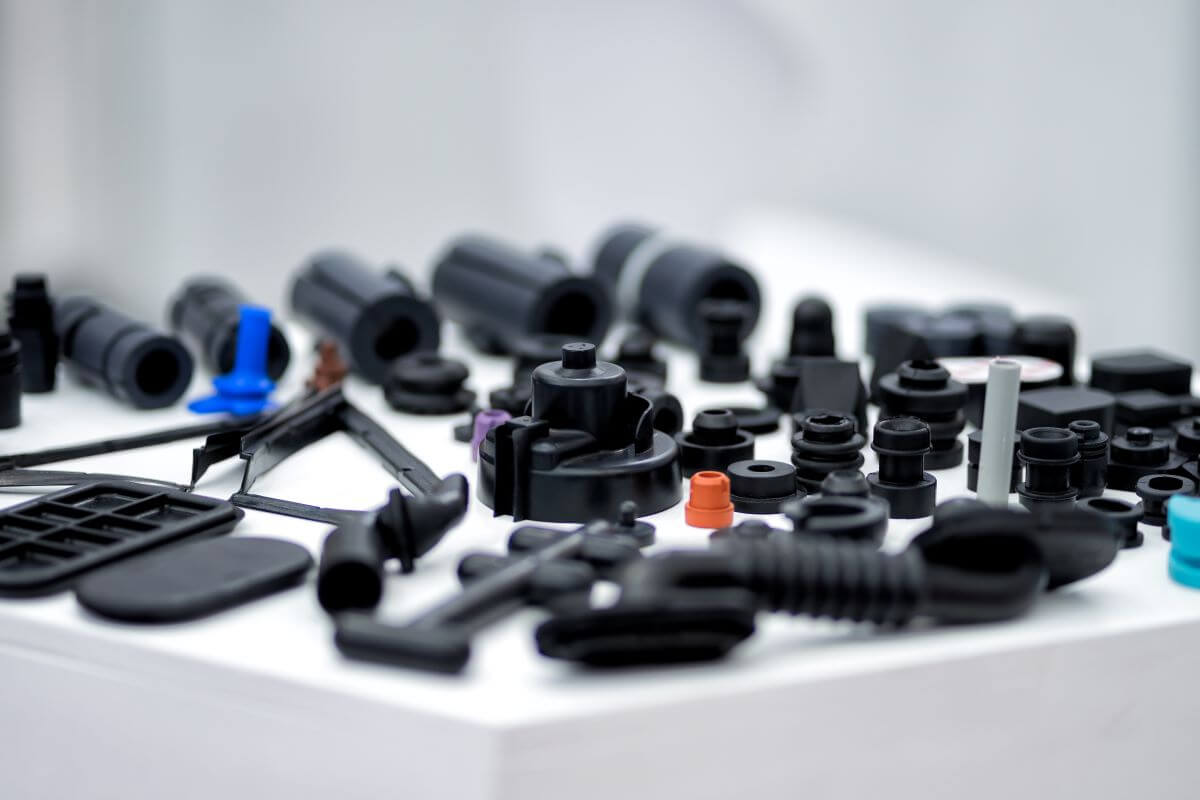
Every product starts with a single part. For engineers, startups, and product teams bringing a plastic component to life, the first major manufacturing decision is almost always the same: is injection molding the right fit, and can it work for small quantities? The answer, increasingly, is yes—and the path to getting there is more straightforward than many people realize.
Injection molding has long been associated with high-volume production. The economics of steel tooling, setup time, and per-part costs traditionally pushed the break-even point into the tens of thousands of units. But the landscape has shifted. Advances in aluminum tooling, rapid prototyping, and on-demand manufacturing have opened the door to small-batch injection molding runs starting as low as 100 to 10,000 parts—without sacrificing the dimensional accuracy, surface finish, or material integrity that make injection molding the preferred process for production-grade plastic components.
This guide walks through everything you need to know to get started with injection molding for small-batch production—from understanding what small batch actually means, to choosing the right tooling, materials, and manufacturing partner for your program.
What Counts as a Small-Batch Injection Molding?
The term ‘small batch’ gets used loosely in manufacturing, so it helps to ground it in concrete numbers. In the context of injection molding, small-batch or low-volume production generally refers to runs ranging from approximately 100 to 10,000 units. That said, the range isn’t rigid—context matters.
- Prototyping and early design validation: 10–500 parts
- Pilot production and market testing: 500–2,500 parts
- Niche or specialty market runs: 2,500–10,000 parts
Below 100 units, alternative manufacturing methods like 3D printing or CNC machining are often more cost-effective, since they require no tooling investment. Above 10,000 units, the calculus typically favors hardened steel tooling and traditional high-volume molding. Small-batch injection molding lives in the middle—delivering production-grade parts at quantities that wouldn’t justify full-scale tooling investment.
Why Injection Molds Still Makes Sense at Low Volumes
With 3D printing and urethane casting readily available, you might wonder why injection molding is worth pursuing at smaller quantities. The answer comes down to part quality and material fidelity. Injection molding produces parts from actual engineering-grade thermoplastics—the same materials your final product will use—processed under the same pressures and thermal conditions as full-scale production. That matters enormously for functional testing, regulatory submissions, and customer evaluations.
The Advantages
Production-equivalent quality: Parts meet the same dimensional tolerances, surface finish standards, and mechanical properties as high-volume production components.
- Material breadth: You can mold virtually any thermoplastic resin—ABS, polycarbonate, polypropylene, nylon, PEEK, and hundreds of others—in quantities that would be impossible or impractical with 3D printing.
- Design validation with real parts: Functional prototypes from actual injection-molded thermoplastics behave differently under load, temperature, and chemical exposure than 3D-printed analogs. Small-batch molding gives you that data before you commit to full production tooling.
- Scalability: When demand grows, your tooling can often be used or adapted for larger production runs without starting over.
- Lower risk: Validating your design and market fit with a controlled small run before a six-figure tooling commitment protects both development budget and launch timeline.
For a deeper look at how the injection molding process works from end to end, see KS Manufacturing’s overview of injection molding basics.
Choosing the Right Tooling Between Aluminum vs. Steel Molds for Small Batch Production
Tooling is the single largest cost driver in injection molding, and it’s where the strategic difference between small-batch and high-volume production is most pronounced. Understanding your mold options is the first real decision you’ll make.
Aluminum Molds
For small-batch production, aluminum molds are the standard starting point. They cost significantly less than hardened steel molds, fabricate faster—typically in two to four weeks compared to six to twelve weeks for production steel—and are capable of producing anywhere from 10,000 to 100,000 parts over their usable lifespan, depending on material, part complexity, and mold maintenance.
The trade-off is durability. Aluminum is softer than tool steel, meaning it wears more quickly under the heat and pressure cycles of injection molding. Abrasive materials like glass-filled nylons or mineral-reinforced compounds will accelerate that wear. For most standard thermoplastics and geometrically simple parts, though, aluminum tooling performs reliably within small-batch quantity targets.
Cost for aluminum molds typically ranges from $2,000 to $15,000 depending on part complexity, number of cavities, and feature detail—a fraction of the $25,000 to $100,000+ investment required for hardened production steel.
Soft Steel (Pre-Hardened) Molds
Pre-hardened P20 steel sits between aluminum and fully hardened tool steel. It machines relatively quickly, costs less than H13 or S7 steel, and offers substantially better wear resistance than aluminum. Pre-hardened molds are well-suited for bridge tooling scenarios—where you need more longevity than aluminum provides but aren’t yet ready to commit to full production tooling.
Hardened Steel Molds
Fully hardened tool steel molds—made from H13, S7, or stainless 420 steel—are the workhorses of high-volume injection molding. They can endure 500,000 to several million cycles without significant dimensional drift, making them the only viable choice for mass production. For small-batch programs, they’re generally unnecessary and overpriced, but they may make sense when design is fully locked and the long-term volume forecast justifies the investment.
For a detailed breakdown of mold types and their role in the injection molding cycle, KS Manufacturing’s guide covers the subject from material selection through part ejection.
Selecting the Right Material for Your Small-Batch Run
One of the most important advantages of injection molding over alternative prototyping methods is the ability to use production-intent thermoplastics. Material selection for small-batch programs follows the same logic as full-scale production: the choice is driven by the part’s functional requirements, environmental exposure, regulatory constraints, and assembly method.
The most common thermoplastics used in small-batch injection molding include:
- ABS (Acrylonitrile Butadiene Styrene): Strong, rigid, easy to machine and finish. Used extensively in consumer electronics housings, enclosures, and structural components. Processes easily and offers excellent dimensional stability.
- Polypropylene (PP): Versatile, chemically resistant, and lightweight. A go-to material for containers, automotive components, and living hinge applications. Its semi-crystalline structure requires careful process control to manage shrinkage.
- Polycarbonate (PC): High impact strength with excellent optical clarity. Common in safety equipment, lighting components, and any application where transparency and toughness must coexist.
- Nylon (PA): Exceptional wear and abrasion resistance. Used in mechanical components, gears, and structural parts under load. Moisture absorption must be managed during processing.
- PEEK (Polyether Ether Ketone): A high-performance engineering polymer for demanding thermal, chemical, and structural environments. Higher processing complexity and cost, but unmatched performance at temperature.
For small-batch programs, it’s worth discussing material choices with your molding partner early. Material selection affects gate design, cooling channel placement, draft angles, and process parameters—all of which influence whether your first tool run succeeds or requires rework.
Designing for Manufacturability Before You Cut Steel
No aspect of small-batch injection molding has a higher return on investment than design for manufacturability (DFM) review conducted before tooling begins. In injection molding, the costliest mistakes are the ones discovered after the mold has already been cut. Modifying hardened steel after machining is neither fast nor inexpensive—and even aluminum mold corrections can introduce delays that derail a product launch.
The core DFM principles for injection-molded parts are well established, and adhering to them at the design stage prevents the most common defects:
Uniform Wall Thickness
Consistent wall thickness is the single most impactful design decision in injection-molded parts. It governs how molten plastic flows through the mold, how evenly the part cools, and how dimensionally stable the finished component will be. As a general guideline, wall thickness for most thermoplastics should fall between 0.080 and 0.160 inches (2.0 to 4.0 mm), though this varies by material. Where transitions are unavoidable, use gradual tapers—never abrupt steps.
Draft Angles
Draft angles are the slight tapers applied to vertical surfaces that allow the part to release cleanly from the mold during ejection. Without adequate draft, parts stick, scuff, or damage the tooling. A minimum of 1 to 2 degrees on most surfaces is the standard starting point; textured surfaces require more. Any draft is better than no draft.
Ribs and Bosses
Ribs add structural stiffness without increasing overall wall thickness. Bosses provide mounting points for fasteners and inserts. Both are among the most common causes of sink marks and cosmetic defects when improperly sized. Rib thickness should not exceed 60 percent of the adjacent wall. The boss wall thickness should not exceed 60 percent of the adjacent nominal wall. Boss outer diameters should be 2.0 to 2.4 times the outer diameter of the screw or insert the boss is designed to receive.
Gate Location and Parting Lines
Where plastic enters the mold—the gate—and where the mold halves meet—the parting line—affect the appearance, strength, and warpage behavior of the finished part. Gate placement should direct flow toward thicker sections first. Parting lines should be placed where witness marks or flash are acceptable from a functional and cosmetic standpoint.
For a comprehensive look at injection molding design principles, KS Manufacturing’s resource on essential design guidelines for injection molding covers each of these topics in depth.
How the Small-Batch Injection Molding Process Works
Once design is validated and tooling strategy is confirmed, the injection molding process follows a structured sequence that is consistent whether you’re running 100 parts or 100,000.
1. Mold Fabrication
A CNC machinist or toolmaker machines the mold cavity and core from the chosen tool material—aluminum, pre-hardened steel, or hardened tool steel. Lead times for small-batch aluminum tooling typically run two to four weeks. Once machined, the mold is polished, fitted with cooling channels, ejector pins, and gating features, and validated on a sample run.
2. Material Preparation
The selected thermoplastic resin arrives as small pellets. Most engineering resins—especially hygroscopic materials like nylon or polycarbonate—must be dried in a desiccant dryer before processing. Residual moisture causes cosmetic defects, reduced molecular weight, and mechanical property loss. Drying times and temperatures are material-specific and must be followed precisely.
3. The Injection Molding Cycle
The core cycle consists of four stages repeated for every part produced:
- Clamping: The two mold halves are pressed together under hydraulic or mechanical clamping force. Clamp tonnage must be sufficient to resist the injection pressure and prevent flash—the thin film of plastic that bleeds along the parting line when clamp force is insufficient.
- Injection: Molten plastic is pushed through the barrel nozzle into the mold cavity under high pressure. Injection is controlled by velocity during the fill phase, then switches to pressure control (pack and hold) to compensate for material shrinkage as the part solidifies.
- Cooling: Cooling channels circulating temperature-controlled water extract heat from the mold, solidifying the part. Cooling time is typically the longest phase of the cycle and directly determines cycle time and throughput.
- Ejection: Once the part has solidified, the mold opens and ejector pins push the finished component free. The mold closes and the cycle begins again immediately.
4. First Article Inspection
For small-batch programs, first article inspection (FAI) is essential. A small sample of parts from the initial run—typically 5 to 30 pieces—is measured against the drawing and specification.
Dimensions are verified, cosmetic criteria are evaluated, and any deviations are addressed before full production proceeds. At this stage, minor process adjustments can correct most dimensional issues without modifying the tool.
5. Secondary Operations
Depending on the application, molded parts may require secondary operations before they’re ready for assembly or end use. Common secondary processes include pad printing, laser etching, ultrasonic welding, insert installation, and assembly. Many contract manufacturers handle these operations in-house, enabling you to receive a more complete subassembly rather than raw molded components.
Common Challenges in Small-Batch Injection Molding (and How to Address Them)
Small-batch programs introduce a unique set of challenges that differ from both prototyping and high-volume production. Understanding them before you start saves both time and budget.
High Per-Part Cost Relative to Large Runs
Tooling cost is amortized across fewer parts in a small batch, which means per-unit economics are always less favorable than high-volume production. The way to mitigate this is to design for moldability upfront—minimizing feature complexity, reducing the number of side actions, and standardizing gate locations reduces tooling cost and therefore the per-part amortization burden.
Longer Setup and Process Optimization Time
Even for small runs, injection molding requires process development: establishing optimal injection speed, pack pressure, cooling time, and melt temperature. For a new tool on a new material, this process development phase can consume a meaningful portion of a small batch. Working with a manufacturer experienced in scientific molding methodology—data-driven process development that isolates and validates each variable—reduces this iteration time significantly.
Warpage and Dimensional Variation
Inconsistent wall thickness, inadequate cooling, or improper gate placement can cause parts to warp or vary dimensionally from one cycle to the next. These issues are almost always rooted in design or process, not equipment failure. DFM review catches the design contributors. Careful process development at startup addresses the rest.
Material Availability at Low Quantities
Some specialty engineering resins have minimum purchase requirements that are difficult to justify for small runs. A knowledgeable contract manufacturer with established material supplier relationships can often source small lots of specialty resins or suggest equivalent materials available in lower quantities.
Working with a Contract Manufacturer for Small-Batch Programs
The decision to partner with a contract manufacturer versus running parts in-house is straightforward for most organizations without dedicated injection molding equipment: a capable contract manufacturing partner provides not just machine time, but tooling expertise, material knowledge, process development capability, and quality systems that would take years and significant capital to replicate internally.
For small-batch programs specifically, the right contract manufacturer brings several advantages that directly address the challenges described above:
- DFM expertise: Experienced molders catch design issues before tooling is cut, saving the cost of mold modifications and lost time.
- Toolroom capability: In-house mold building and repair means faster turnaround on tool changes and eliminates the coordination delays of outsourced tooling.
- Material and process knowledge: Deep familiarity with thermoplastic behavior across a wide range of resins reduces process development time and first-run defect rates.
- Quality systems: ISO-certified quality processes—including first article inspection, statistical process control, and documented process validation—ensure that small-batch parts meet the same standards as production components.
- Scalability: A contract manufacturer positioned to support your program from small batch through full production eliminates the disruption of transitioning suppliers when volume grows.
KS Manufacturing’s contract manufacturing services are designed around exactly this model, providing engineering-led support across the entire product lifecycle, from early-stage prototyping through full production and secondary operations, all within a single supply chain relationship.
How Small-Batch Injection Molding Fits Into Your Product Development Timeline
Understanding where small-batch injection molding fits in the broader product development arc helps set realistic expectations for timelines and investment.
A typical small-batch injection molding program timeline breaks down as follows:
- Design finalization and DFM review: 1–2 weeks. This phase is the highest-leverage investment in the program—time spent here reduces risk downstream.
- Mold fabrication (aluminum tooling): 2–4 weeks. Complexity, tolerances, and tool material influence the upper end of this range.
- Mold qualification and first article: 1–2 weeks. Sample parts are produced, inspected, and approved against drawing requirements.
- Production run: Days to a few weeks, depending on quantity and cycle time.
From design freeze to first production parts, a well-managed small-batch aluminum tooling program typically runs six to ten weeks. That’s a meaningful lead time advantage over traditional high-volume steel tooling, which commonly requires twelve to twenty weeks from design to first article.
For context on how injection molding serves different industries and production needs, KS Manufacturing’s industry overview covers the full spectrum of applications where precision molding drives product success.
What to Look for in a Small-Batch Injection Molding Partner
Not every injection molder is set up to serve small-batch programs effectively. High-volume production shops optimize their operations around long runs, multi-cavity tools, and minimal changeover—the opposite of what small-batch programs need. When evaluating a manufacturing partner for small-batch injection molding, look for the following:
- In-house toolroom: The ability to build, modify, and repair molds on-site reduces lead times and improves program control.
- Scientific molding methodology: Data-driven process development produces more consistent results with less iteration, which is especially valuable when cycle counts are low.
- Engineering support: A team capable of DFM review, mold flow analysis, and material guidance is worth more to a small-batch program than raw machine capacity.
- Quality certification: ISO 9001 certification provides evidence of documented quality systems, controlled processes, and a framework for consistent part quality.
- Secondary operations capability: In-house pad printing, laser etching, ultrasonic welding, and assembly reduces supply chain complexity and speeds time to a complete, market-ready component.
- Track record with similar programs: Ask for examples of similar part complexity, material, and batch size. References from comparable programs are the most reliable indicator of fit.
KS Manufacturing’s plastic injection molding services combine in-house toolroom capability, scientific molding expertise, and comprehensive secondary operations—enabling small-batch programs to move efficiently from tooling through finished goods.
Get Started with KS Manufacturing Injection Molders Today
Starting an injection molding program for small-batch production doesn’t require a massive upfront commitment. The process is iterative by nature—and with the right partner, each phase builds on the last without costly resets.
Here’s how to move from idea to first production parts:
- Finalize your part design and identify your target material. Your part geometry drives tooling complexity, and your material drives process requirements. Having both locked down—or at least narrowed to a shortlist—enables a meaningful DFM conversation.
- Engage a contract manufacturer early for a DFM review. This is the most effective use of engineering time in the entire program. A DFM review typically takes a few days and can prevent weeks of tooling rework.
- Select your tooling strategy based on volume and timeline. Aluminum for 10,000 parts or fewer and development programs. Pre-hardened steel for bridge production. Hardened tool steel when design is locked and long-term volume is confirmed.
- Request a first article inspection plan. Agree with your manufacturer on which dimensions will be measured, what tolerances are critical, and what constitutes an approved first article before tooling begins.
- Plan for secondary operations from the start. If your part requires assembly, labeling, or surface treatment, include those requirements in your initial scope so the manufacturing partner can plan accordingly.
Small-batch injection molding is one of the most powerful tools available to product developers and manufacturers who need production-grade parts without a full production commitment. With the right design, tooling strategy, material selection, and manufacturing partner, it’s entirely possible to have qualified, market-ready injection-molded parts in your hands in six to ten weeks—at a fraction of the cost of a traditional production tooling program.
Ready to get started? KS Manufacturing has been supporting injection molding programs across all scales—from early-stage small-batch runs to full production—from our facilities in California and Mexico. Contact us to discuss your program and get an engineering review of your part design.