November 12, 2025

How Cleanroom Contamination Levels Are Monitored and Measured

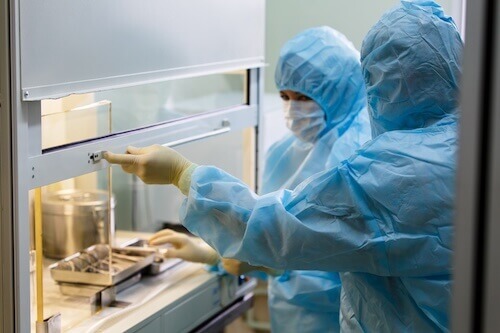
scientists working in a cleanroom injection molding

When you tour a medical injection‑molding facility, the first thing you notice isn’t the shimmering molds or shiny resin pellets; it’s the environment itself. Airlocks, bunny suits, and quiet HEPA fans are everywhere. That’s because a single dust particle or stray microbe can ruin a batch of diagnostic cartridges or injection‑molded implants.

In fact, natural air in a typical urban environment contains around 35 million particles ≥0.5 µm per cubic meter, about 100 times dirtier than an ISO 8 cleanroom. ISO Class 1 cleanrooms allow zero particles ≥0.5 µm and only twelve 0.3 µm particles per cubic meter. Monitoring and controlling contamination to that level requires a deliberate strategy.

Understanding Cleanroom Classes and Standards

Cleanrooms are classified by the maximum allowable concentration of airborne particles. The international ISO 14644‑1 standard defines nine classes (ISO 1–9) based on particle counts per cubic meter. For example, ISO Class 7 environments, often used for medical plastic molding, allow roughly 352,000 particles ≥0.5 µm per cubic meter, while ISO Class 8 (common for less‑critical device assembly) allows about 3.52 million particles. A normal room may exceed 35 million particles, underscoring why cleanroom controls are essential.

ISO 14644‑2 complements the classification by establishing monitoring requirements. It calls for routine particle counting, differential‑pressure tracking, and environmental condition logging; data must be trended and deviations investigated. The standard also specifies that ISO Class 5 cleanrooms be requalified every six months, and ISO Classes 6–8 be requalified annually or sooner if major changes occur. These guidelines ensure that a cleanroom isn’t simply clean on day one but continues to meet its classification throughout its life.

Many medical manufacturers follow ISO 13485 and FDA 21 CFR Part 820, which require environmental control and thorough documentation. Regulatory compliance, gowning protocols, material handling procedures, and HEPA filtration are foundational to a cleanroom program. Regular validation and auditing, including air particle counting, help prove ongoing compliance.

Particle Monitoring: Counting What You Can’t See

Particle counters

Particle counting is the cornerstone of environmental monitoring. Modern particle counters detect and quantify particles as small as 0.1 µm. These devices may be portable hand‑held units used for periodic sampling or installed sensors integrated into the HVAC system. Continuous systems provide real‑time feedback, allowing personnel to respond immediately to upward trends.

Manual vs. automated monitoring

Some facilities still rely on operators to perform manual particle counts throughout the day. This approach is costly, monotonous, and highly error‑prone. Thousands of records must be manually collected and transcribed, introducing opportunities for data loss or misinterpretation. Even using USB drives to download data can introduce physical or cyber contamination.

Automated solutions eliminate these problems. Continuous monitoring systems aggregate data from fixed and portable particle counters, store records in a secure cloud platform, and provide trend analysis. Operators can view live or historical data from any web‑enabled device and receive alerts when particle counts exceed action limits. Automated monitoring also supports ALCOA+ data‑integrity principles and 21 CFR Part 11 compliance, making audit readiness much easier.

Selecting sampling points and action levels

ISO 14644‑2 emphasizes risk‑based monitoring. Sampling locations and frequencies are chosen by assessing where contamination is most likely to affect product quality. Critical zones around injection presses, molds, and packaging stations are monitored more frequently than background areas. Cleanroom managers set alert and action levels—thresholds that trigger investigation or immediate corrective action. Data trending helps refine these thresholds over time.

Microbial Monitoring: Watching the Living Contaminants

In addition to inert particles, cleanrooms must control microorganisms. The EU GMP Annex 1 and ISO standards expect a contamination control strategy that addresses both surface and air monitoring. Surface monitoring uses contact plates or swabs cultured to detect viable organisms, while air monitoring uses active or passive sampling.

Passive air sampling

Passive methods employ settled plates, such as Petri dishes containing nutrient medium, left open for a defined period. They collect only particles that fall by gravity or are blown onto the plate. Because exposure time affects the probability of detection, results are qualitative or semi‑quantitative and are best used as a supplement to active methods.

Active air sampling

Active sampling devices draw a known volume of air through an impaction head or membrane filter, depositing microorganisms onto an agar surface or filter for incubation. These methods quantify organisms per unit volume and are considered more accurate than passive plates.

Rapid microbial detection

New technologies can distinguish microorganisms from inert particles in real time using biofluorescent particle counters (BFPCs), PCR, or impedance microbiology. These provide immediate results, enabling rapid response to microbial excursions. However, adoption remains limited due to high cost and validation challenges. Regulators encourage their use for continuous monitoring in critical areas.

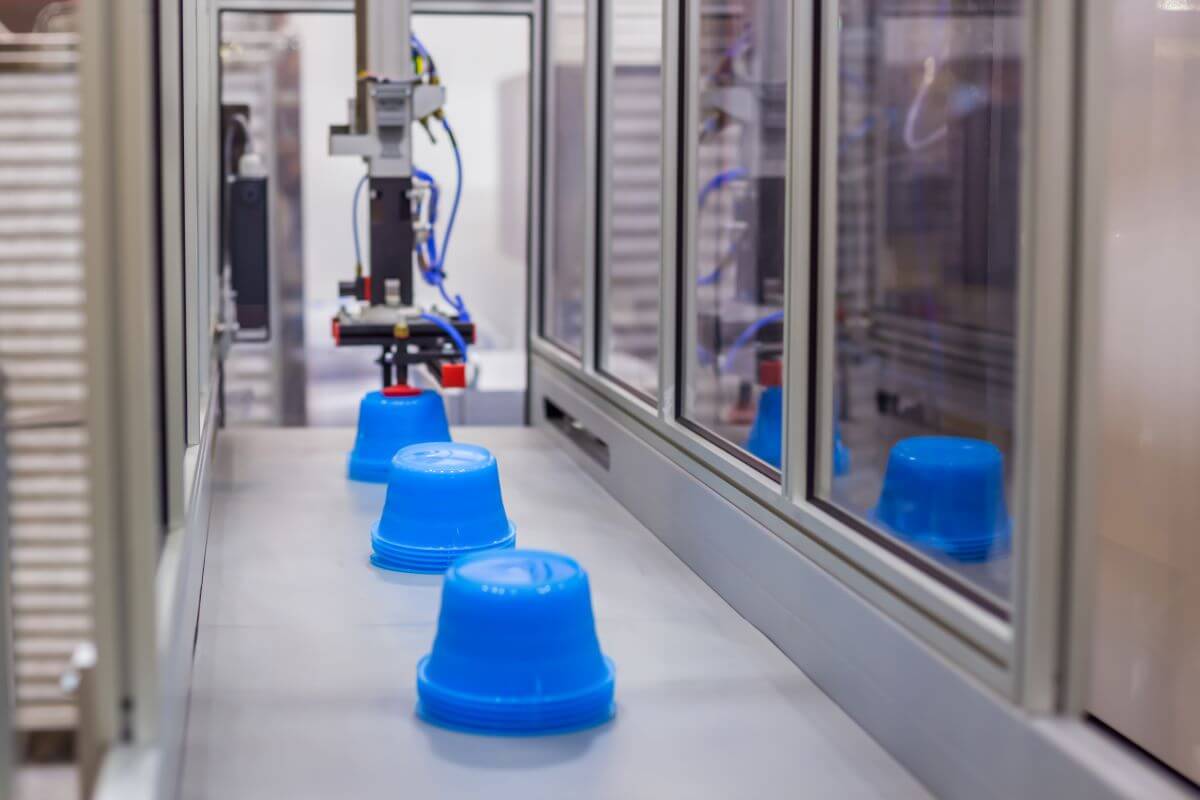
Our cleanroom production environments use ISO‑class protocols to minimize contamination during medical injection molding.

Environmental Monitoring: Temperature, Humidity, Pressure, and Beyond

Temperature and humidity

Controlling temperature and humidity is crucial because they directly impact material properties and contamination. The ideal cleanroom temperature is around 70 °F (21 °C) with ±2 °F variance and the ideal relative humidity range is 30–40 %. Deviating from these ranges can cause workers to sweat or shiver, shedding particles, and can degrade product quality. High humidity promotes microbial growth and causes moisture absorption, corrosion, and process variability. Low humidity leads to cracking, static build‑up, and electrostatic discharge, which attracts contaminants to plastic surfaces.

To maintain stable conditions, cleanrooms use HVAC systems with humidifiers, dehumidifiers, and temperature‑controlled air. Sensors continuously monitor ambient conditions and trigger alarms or adjust equipment when limits are exceeded. As part of our quality program, we track these parameters in real time, ensuring the molding process remains within specification.

Differential pressure control

Airflow and pressure are essential to contamination control. Cleanrooms employ differential pressure to direct air movement: positive‑pressure rooms maintain higher pressure inside than outside, so air flows outward through any leaks, preventing contaminants from entering. Negative‑pressure rooms maintain lower pressure, containing hazardous agents within the room.

Differential pressure sensors detect changes as small as 0.5 Pascals (Pa) and provide continuous monitoring. They trigger alarms if pressure falls outside preset ranges and can automatically adjust HVAC systems to restore balance. Early detection prevents structural leaks, HVAC failures, or improper door sealing. Maintaining proper pressure differentials is critical for patient safety and regulatory compliance.

Airborne molecular contamination and chemical vapors

Beyond particles and microbes, some cleanrooms monitor airborne molecular contamination (AMC)—traces of chemical vapors or gases that can damage sensitive components. AMC monitors detect volatile organic compounds (VOCs) and acid gases at parts‑per‑billion levels. These monitors are particularly important in semiconductor and electronics manufacturing but can also be useful in pharmaceutical cleanrooms to identify solvent residues.

Integrating Monitoring Into Medical Injection Molding

Cleanroom monitoring isn’t a standalone program; it’s integrated into the entire medical injection‑molding process. At KS Group, we operate ISO Class 7 and 8 cleanrooms for high‑volume production of medical components. We employ continuous particle counters, differential‑pressure sensors, and HVAC control to maintain stable environments. Our quality control protocols include real‑time temperature and humidity monitoring and regular microbiological sampling. When deviations occur, our team initiates root‑cause investigations, corrective actions, and documentation to maintain compliance and product integrity.

Because injection molding exposes molten plastic, the risk of contamination is significant. Cleanrooms protect products from dust, mold spores, and skin flakes that could embed into parts. They also stress that gowning protocols, all‑electric presses, and laminar airflow hoods help minimize contamination. Continuous monitoring confirms that these controls are working as intended.

Protecting Products and Patients with Cleanroom Monitoring

Maintaining and measuring cleanroom contamination levels is about more than passing a certification test. It’s about protecting patients and ensuring the reliability of every injection‑molded component. Effective monitoring programs combine particle counting, microbial sampling, temperature and humidity control, differential‑pressure monitoring, and sometimes AMC detection. Automated systems reduce human error and improve data integrity, while risk‑based monitoring plans and regular requalification keep processes aligned with ISO standards.

At MOS Plastics, we take environmental control seriously. Our ISO‑certified cleanrooms, rigorous monitoring protocols, and continuous improvement culture ensure that the medical devices we produce meet the highest standards. If you’re seeking an injection molding partner with a clean room environment you can trust, we’d love to talk.

MENU