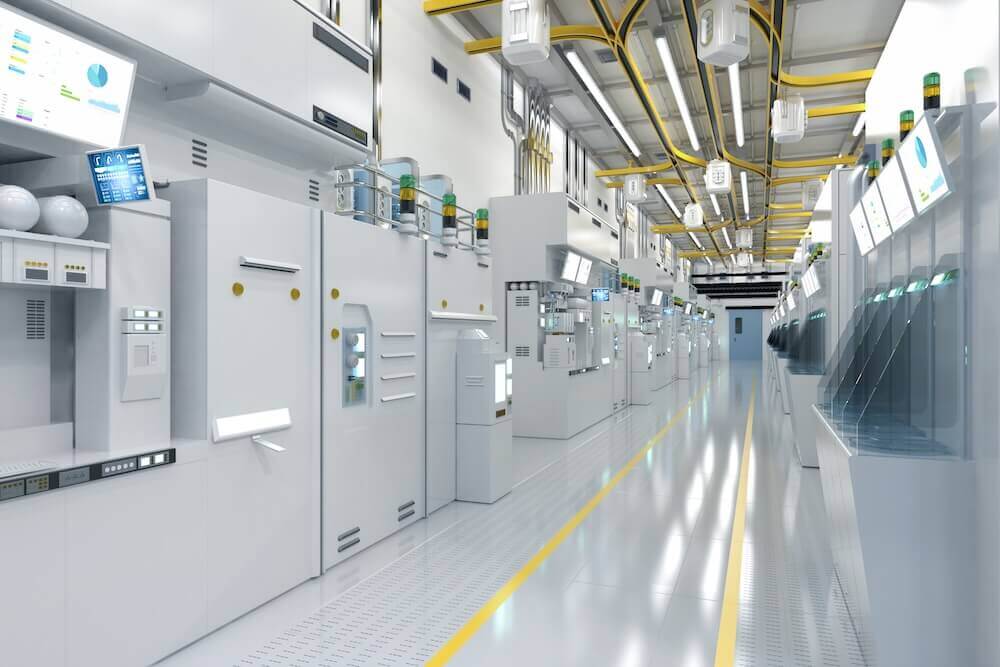
Maintaining sterile conditions is the very reason cleanrooms exist. In industries like pharmaceuticals, biotechnology, and medical-device manufacturing, even a single stray particle can compromise a batch of drug product or make a device unsafe. Humans are the largest source of contamination. We shed tiny skin flakes, hair, and microbes continuously.
One study notes that a worker can shed about 600,000 particles of skin per hour even when gowned. Those particles may carry microbes or dust that could ruin a semiconductor wafer or contaminate a vial of vaccine. Beyond shedding, human operators also introduce variability; fatigue leads to inconsistent wiping and mistakes that compromise sterility.
To protect products and patients, manufacturers increasingly rely on automation and smart technology to keep people and the particles they generate out of critical zones.
Why People Can Be A Contamination Risk
People generate contaminants in multiple ways:
- Skin flakes and hair: Our outer skin renews itself roughly every 27 days. Many of those particles carry bacteria or fungi that could contaminate sterile devices or cultures.
- Human error and fatigue: Workers become tired, making wiping inconsistent or missing steps. Manual monitoring and recording of environmental data requires thousands of records and introduces data-integrity risks. Mistakes can lead to lost batches, costly investigations, and product recalls.
- Gowning and de-gowning: Proper gowning keeps particles out, but the process is time-consuming. The time it takes for workers to don and remove protective suits adds cost and still sheds particles.
These factors make human presence the weak link in a cleanroom contamination control strategy. Eliminating or minimizing human intervention is the most effective way to stop particulates at the source.
How Robotics and Automated Systems Reduce Contamination
Robots do not shed like people
Cleanroom-rated robots are designed to operate in environments classified by ISO 14644-1. Their bodies are sealed and constructed from non-dusting materials. Unlike human workers, robots do not shed fibers or skin, and they can operate without breaks or fatigue. Robots perform tasks with unparalleled consistency and accuracy and are certified to meet ISO 14644-1 cleanliness levels. This prevents the release of harmful particles and microorganisms that humans inevitably shed.
Fewer people in the cleanroom
The most straightforward way automation reduces contamination is by keeping people out. Removing people means fewer opportunities for hairs, droplets, or clothing fibers to enter the process. Autonomous units with calibrated sensors move through regulated areas without adding new particles, trimming risks tied to frequent people traffic.
Consistency and process control
Robots perform the same motion every cycle, reducing variability. They maintain precision in tasks like vial filling, catheter assembly, or wafer handling. Robots deliver unmatched consistency and accuracy, eliminating fatigue-related errors. This reliability enhances contamination control and also boosts productivity. Automated material-handling systems transport components within the cleanroom without human intervention, further reducing contamination risk.
Built-in cleanliness and compliance
Robots for aseptic manufacturing must meet strict standards for particle emission. Regulatory guidance in the EU’s Annex 1 to Good Manufacturing Practices states that facilities should adopt barrier technologies, isolators, and robotic systems to eliminate direct human interventions in Grade A zones. The guidance notes that robots must be assessed for particle emission and surface roughness to ensure they do not become sources of particulate or microbial contamination. As a result, cleanroom robots are tested to ISO 14644 performance grades and built with smooth, easy-to-clean surfaces.
Reduced waste and improved ROI
Eliminating human contamination also saves money. The time workers spend gowning and degowning, and the waste generated by contaminated product, make manual cleanroom work costly. Robots work faster than humans, don’t require breaks, and reduce waste by minimizing particle disbursement, which leads to increased production and profit.
Smart Monitoring and Digital Technologies for Contamination Control
Automation in cleanrooms goes beyond replacing people with robots. Smart sensors and software continuously monitor environmental conditions:
- Environmental monitoring: Automated systems track temperature, humidity, pressure, and airborne particle counts in real time. Integrated monitoring systems track variables such as vibration, temperature fluctuations, and particulate levels, allowing manufacturers to address issues before they affect quality.
- Automated material handling and scheduling: Material-handling robots and conveyor systems reduce manual transportation of parts. Automated systems can also manage inventory and workflow scheduling to optimize efficiency and minimize contamination.
- Safety and compliance: Automation reduces manual handling of hazardous materials and employs sensors and alarms to detect irregularities. Automated systems simplify compliance by continuously recording environmental conditions and generating reports for regulatory audits.
- Vision and inspection systems: Advanced vision systems and AI-based inspection tools identify defects or contaminants that human inspectors might miss. These systems provide immediate feedback, enabling corrective actions before contamination affects an entire batch.
Combining robotics, continuous monitoring, and digital data management helps manufacturers reduce both contamination risk and the burden of manual data entry. The result is a smarter cleanroom that operates with fewer people and greater confidence in sterility.
Bringing Together Robots and Human Expertise in a Cleanroom Environment
Despite the advantages of automation, cleanrooms will not become entirely human-free. Precision tools like swabs are still essential for accessing tight channels and delicate parts. Automated systems handle routine tasks and provide consistent baseline cleanliness, while people perform focused sanitation and make critical decisions. This hybrid approach pairs the steadiness of machines with the judgement and oversight of skilled operators to achieve the highest levels of sterility.
What This Means for Medical Injection Molding
In medical device manufacturing, contamination control is non-negotiable. MOS Plastics operates ISO-classified cleanrooms (Class 7 and Class 8) where temperature, humidity, and particle counts are tightly controlled. Beyond air cleanliness, gowning protocols, dedicated material handling, and all-electric presses further reduce contamination risk.
Adding automation and robotics to this environment amplifies those safeguards, as robots can assemble micro-catheters or handle syringes without shedding particles and automated monitors ensure environmental conditions stay within specification. For example, MOS Plastics’ medical injection molding services utilize class 7 cleanrooms with horizontal and vertical molding machines to produce tight-tolerance parts efficiently.
Automation also supports regulatory compliance. Medical device injection molding companies must follow stringent standards like ISO 13485 and the FDA’s Quality System Regulation. Automated records of environmental monitoring and process parameters simplify validation and audits, while robots help meet the contamination-control requirements of ISO 14644 cleanrooms.
Investing in advanced automation allows MOS Plastics to ensure that every component, from diagnostic housings to implantable parts, is produced with consistency, traceability, and minimal contamination risk.
Embracing the Automation and Forward Thinking
Human beings are inherently “dust generators,” and in cleanroom manufacturing the stakes are too high to rely on manual processes alone. Modern cleanrooms combine robotics, environmental sensors, and digital data management to keep people out of critical areas, maintain precise conditions, and detect problems early. Robots provide consistent, particle-free handling; automated systems monitor and control the environment; and smart software ensures compliance and traceability. Together, these technologies drastically reduce human-derived contamination while improving productivity and regulatory confidence.
As medical devices become more complex and regulatory expectations continue to rise, embracing automation is no longer optional and has become a competitive necessity. Investing in automation protects patients and enables innovation, showing how technology can transform cleanroom production for the better.
Learn how MOS Plastics can help your facility implement advanced automation solutions to improve product quality, maintain compliance, and reduce contamination risk. Contact MOS Plastics today.