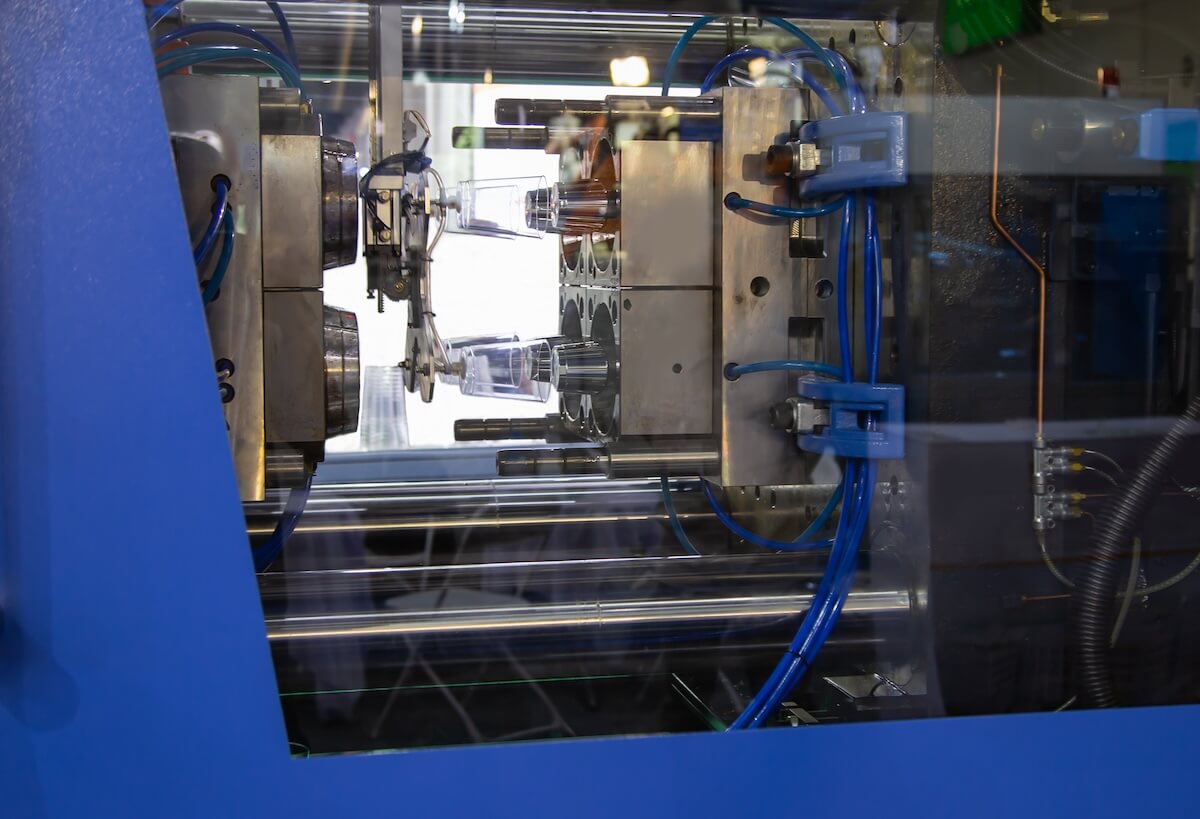
Every second counts on the shop floor. When you’re running high-volume production, a five-second reduction in cycle time isn’t a minor tweak—it can translate into thousands of additional parts per year without buying a single new machine. Yet many injection molding operations leave significant efficiency on the table, not because they lack the capability, but because the path to improvement isn’t always obvious.
The global plastic injection molding market was valued at approximately $298 billion in 2024 and is projected to surpass $462 billion by 2033. As demand grows and competition tightens, the manufacturers who win long-term are the ones who get more out of the equipment and processes they already have. Below is a practical guide to doing exactly that.
1. Start by Measuring What You Actually Have
You can’t improve what you haven’t measured. Before making any changes, establish a clear baseline using Overall Equipment Effectiveness (OEE)—a framework that combines machine availability, performance rate, and quality yield into a single efficiency score.
Audit every stage of your injection molding cycle: clamping, injection, cooling, and ejection. Map where your machines are actually spending time versus where they should be. You may find idle gaps between cycles, longer-than-necessary hold phases, or cooling times that were set conservatively and never revisited.
The fix begins with honest data, not assumptions.
2. Attack Temperature Cooling Time First. It’s Your Biggest Leverage
Cooling accounts for 60 to 80% of total cycle time in most injection molding operations. That makes it the single highest-impact area to optimize. Yet it’s also one of the most overlooked, partly because it feels like a fixed constraint. It isn’t.
Here’s where to focus:
- Cooling channel maintenance: Scale and residue buildup inside cooling channels are common culprits of reduced heat transfer. Flushing channels regularly can recover seconds per cycle without any process change.
- Mold temperature control: A reduction in mold temperature can trim cooling time by several seconds. Install chillers to maintain consistent coolant temperature year-round—seasonal variation in municipal water temperature silently degrades your performance in ways that are easy to miss.
- Conformal cooling channels: Traditional straight-drilled channels leave hot spots near complex geometries. Conformal cooling—channels that follow the contour of the mold cavity—improves heat transfer significantly.
- Ejection temperature optimization: Parts don’t need to reach room temperature before ejection—only a temperature at which they can hold their shape. Running a study to find the highest safe ejection temperature often recovers additional seconds per cycle with no quality tradeoff.
Cooling time optimization isn’t about rushing parts out of the mold—it’s about understanding the thermal dynamics of your specific material and geometry. Our overview of the plastic injection molding process covers how heat transfer principles govern this stage in detail.
3. Apply Scientific Injection Molding to Dial In Your Parameters
Too many operations still rely on trial-and-error when setting process parameters. Scientific molding replaces guesswork with a systematic, data-driven approach.
Key areas to target:
- Gate seal study: Determine the exact point at which the gate seals during the hold phase. Many operations use a hold time that’s longer than necessary. Reducing hold time to the actual gate seal point, confirmed by weighing parts, can trim seconds per cycle.
- Injection speed and pressure: High injection speed fills the mold faster but may require longer packing times. Finding the right balance for your specific part geometry and material viscosity is essential.
- Melt temperature: Running hotter than necessary degrades material and wastes energy. Running too cool creates flow problems. Use a systematic approach to find the true processing window for your resin.
- Design of Experiments (DOE): Rather than changing one variable at a time, DOE systematically tests combinations to find the optimal configuration—faster and with less material waste than sequential trials.
Reviewing the fundamentals of injection molding basics is a useful foundation before undertaking a scientific molding review, especially when onboarding new process engineers or evaluating an existing program that’s been running on autopilot.
4. Leverage Automation, Even Incrementally with Mold Analysis Software
Full factory automation isn’t the only path to efficiency gains. Even targeted automation investments produce outsized returns in injection molding environments. Robotic part removal eliminates the variability of manual ejection and allows machines to run tighter cycles with consistent dwell and ejection timing. Automated vision systems catch defects in real time, preventing bad parts from reaching downstream processes and costing you rework hours.
Industry 4.0 integration—connecting machines via IoT sensors that monitor mold temperature, injection pressure, cycle time, energy consumption, and defect rates—provides the real-time visibility needed to catch drift before it becomes scrap.
Start with the basics: cycle time monitoring dashboards that alert supervisors when actual cycle times deviate from target. This single step, often achievable with existing machine controllers, can expose chronic inefficiencies that have been invisible for years.
5. Commit to Preventive Maintenance for Efficient Injection Molding
Unplanned downtime is the enemy of production efficiency. Every machine breakdown disrupts scheduling, creates overtime pressure, and erodes customer confidence. Total Productive Maintenance (TPM)—a structured framework for proactive upkeep—directly addresses this by shifting the maintenance posture from reactive to preventive.
In injection molding, a disciplined TPM program should include:
- Regular mold inspection and cleaning, including vent and parting line maintenance to prevent flash and short shots.
- Hydraulic and mechanical system checks to prevent pressure inconsistencies that creep into cycle performance.
- Cooling channel inspections and periodic flushing, as buildup can silently extend cycle times over months without triggering obvious alerts.
- Screw and barrel assessment, particularly for wear that increases variability in shot size and melt quality.
The goal isn’t perfection, it’s predictability. Machines that run consistently produce parts consistently. And consistent parts mean quality control costs go down alongside scrap rates.
6. Use Simulation Software Before Cutting Steel
Mold simulation tools like Moldflow and Moldex3D allow engineers to analyze fill patterns, identify potential defects, optimize gate placement, and validate cooling channel layouts—all before the mold is machined. This matters for efficiency in two ways.
First, it prevents the costly rework that comes from discovering problems during first article inspection. Tooling modifications on a hardened steel mold are expensive, time-consuming, and disruptive to production schedules. Catching issues in simulation is far cheaper.
Second, simulation directly informs cycle time optimization. Engineers can model how different cooling channel configurations perform under production conditions, compare conformal versus conventional layouts, and identify hot spots that would otherwise only reveal themselves during live production. A comprehensive guide to plastic injection molding walks through how mold design choices—from draft angles to wall thickness uniformity—directly affect both part quality and production cycle performance.
If you’re designing a new mold or evaluating a transfer from another supplier, simulation analysis should be a non-negotiable part of the process.
7. Evaluate Your Mold Configuration for Volume
Single-cavity molds make sense for prototyping and low-volume runs. But if you’re producing tens of thousands or millions of parts annually, the economics of multi-cavity tooling deserve serious attention. Doubling the number of cavities doesn’t double your costs, but it can double your output from the same machine. The per-part cost drops significantly, and throughput increases without any additional floor space or headcount.
The key considerations when evaluating multi-cavity tooling:
- Annual volume: The tooling investment typically justifies itself above a certain production threshold. Work with your molder to calculate the crossover point.
- Part complexity: Simple, consistent geometries are the best candidates. Complex parts with multiple actions can introduce balancing challenges across cavities.
- Runner system design: Hot runner systems eliminate the material waste and secondary processing associated with cold runners, which becomes especially significant at high volumes.
- This is also a good moment to evaluate the broader industries depending on plastic injection molding and how their volume and quality requirements map to your own production context.
Understanding how automotive, electronics, and consumer goods manufacturers approach tooling strategy can surface ideas applicable to your operation.
8. Invest in Your Operators
Process engineers design the program. Operators run it—shift after shift, day after day. An experienced operator who understands why parameters are set the way they are will catch drift, flag anomalies, and make intelligent micro-adjustments. An operator following a checklist without context will run a machine until something breaks.
Efficiency gains made through scientific molding and automation are only as durable as the team maintaining them. This means:
- Cross-training operators on process fundamentals, not just machine operation.
- Creating clear runbooks that explain not just what settings to use, but why—so deviations can be recognized and escalated.
- Building a culture of documentation, where cycle time changes, parameter adjustments, and anomalies are logged rather than corrected silently.
The best operations treat their process knowledge as a competitive asset. They document it, train to it, and continuously refine it.
The Bottom Line for Injection Molding Optimization Tips
Production efficiency in injection molding isn’t a one-time project—it’s an ongoing discipline. The manufacturers who compete most effectively are the ones who measure rigorously, optimize systematically, and maintain relentlessly. Whether you’re targeting cycle time reduction, scrap rate improvement, or higher machine utilization, the strategies above provide a clear roadmap.
At KS Manufacturing, our plastic injection molding services are built around exactly these principles—from scientific process development and precision tooling to real-time quality monitoring and dedicated program management. If you’re looking to improve efficiency on an existing program or launch a new product with production-ready processes from day one, contact our team to discuss what’s possible.