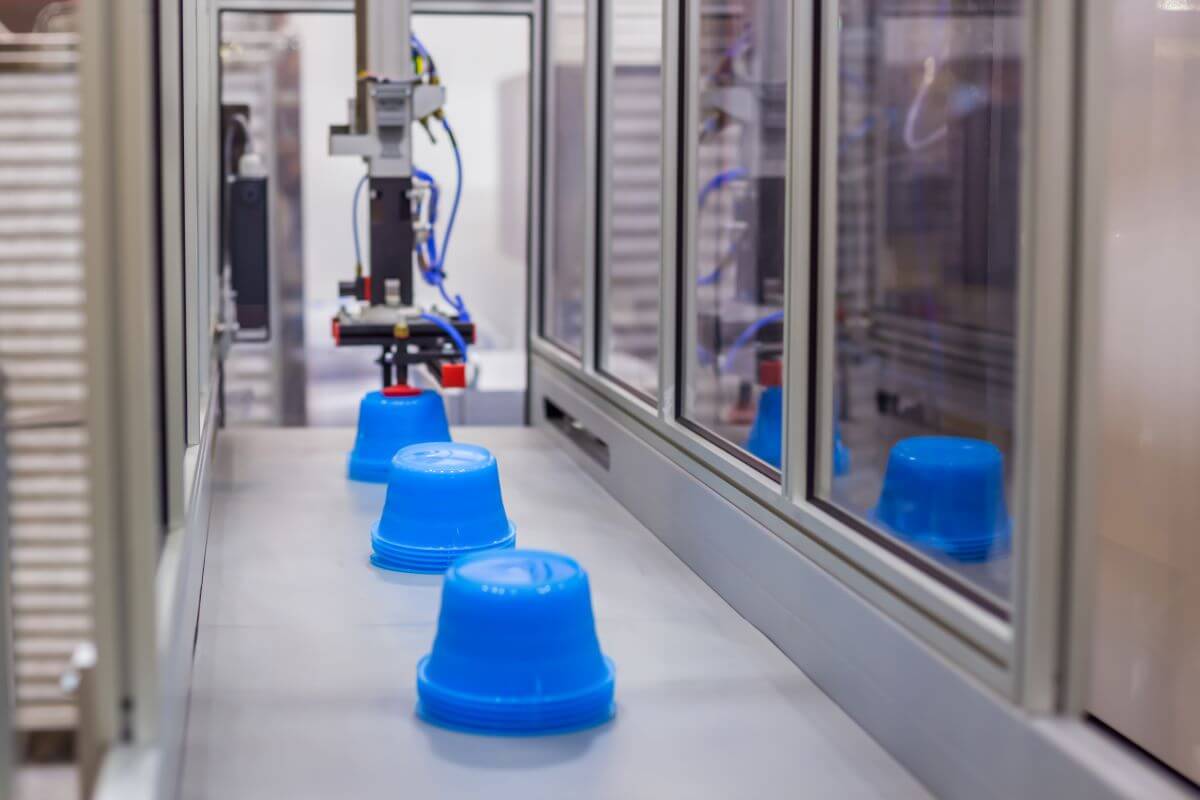
Virtually every room in a modern home contains products made through plastic injection molding. The toothbrush on the bathroom counter, the food storage containers in the kitchen cabinet, the remote control on the coffee table, the child’s building blocks scattered across the floor—all of these are injection molded parts, produced at scale with a level of precision, consistency, and cost efficiency that no other manufacturing process can match.
For consumer goods manufacturers, injection molding is not simply a production method. It is the foundation of product strategy—enabling everything from complex multi-component assemblies to mass-market packaging at unit costs measured in cents. This article examines the specific ways injection molding serves the consumer goods sector, the materials and design considerations that matter most, the sustainability trends reshaping the industry, and what manufacturers should consider when choosing a production partner.
Why Injection Molding Dominates Consumer Goods Production
The injection molding process is uniquely suited to the demands of consumer goods manufacturing for several fundamental reasons. First is scalability. Once a mold has been designed, fabricated, and validated, it can produce hundreds of thousands—or millions—of identical parts with minimal variation from one piece to the next. This level of repeatability is essential for consumer products, where brand consistency, regulatory compliance, and customer expectations all require that every unit performs and looks the same.
Second is cost efficiency at volume. While the upfront investment in tooling can range from a few thousand dollars for simple molds to $100,000 or more for complex, multi-cavity production tools, the per-unit cost drops dramatically as production volumes increase. At high volumes, injection molded parts can cost as little as $0.50 to $5.00 per unit—a price point that makes plastic components economically viable for mass-market consumer products in ways that machined metal or 3D-printed alternatives simply cannot match.
Third is design flexibility. Injection molding can produce parts with complex three-dimensional geometries, thin walls, intricate surface textures, snap-fit connections, living hinges, and integrated features that would be impossible or prohibitively expensive to create through other methods. This allows product designers to consolidate multiple components into a single molded part, reducing assembly costs and improving product reliability. A single injection molded housing can replace what might otherwise require five or six machined or fabricated components.
Finally, injection molding supports an enormous range of materials. From commodity resins like polypropylene and polyethylene to engineering thermoplastics like polycarbonate, ABS, and nylon, manufacturers can select materials that precisely match the performance requirements of each application—whether that means impact resistance for a power tool housing, food-contact safety for a kitchen container, or optical clarity for a cosmetics package. Understanding the relationship between material selection and the molding process is essential for getting the best results.
Consumer Goods Applications: Where Injection Molding Shows Up
The breadth of consumer goods produced through injection molding is staggering. While most consumers never think about how their everyday products are made, injection molding is the invisible backbone behind a vast range of product categories.
- Packaging and closures. Packaging is the single largest application for injection molded plastics, accounting for over 30% of the total market by revenue. Bottle caps, jar lids, dispensing closures, tamper-evident seals, cosmetics compacts, and food storage containers are all produced through injection molding. The packaging segment succeeds because injection molding perfectly balances competing demands: cost minimization, barrier performance, regulatory compliance, and the increasingly important requirement for recyclability.
- Household products. From kitchen utensils and storage bins to laundry baskets, dustpans, hangers, and bathroom organizers, household goods represent a core category for injection molding. These products demand durability, consistent fit and finish, and the ability to produce them at price points that work for mass retail distribution.
- Toys and recreational products. The toy industry relies heavily on injection molding for everything from building blocks and action figures to board game components and outdoor play equipment. The precision required is remarkable—LEGO bricks, for example, are molded to tolerances as fine as 0.002 millimeters to ensure pieces manufactured years apart still interlock perfectly. Safety standards like EN71 and ASTM F963 mandate strict material requirements and dimensional accuracy that injection molding is uniquely equipped to deliver.
- Consumer electronics housings. Smartphone cases, laptop bezels, television enclosures, gaming console housings, and remote controls are all injection molded from engineering plastics selected for their combination of structural rigidity, heat resistance, and aesthetic quality. Multi-shot molding techniques allow manufacturers to combine different materials or colors in a single part, creating soft-touch grips, transparent windows, and textured surfaces without secondary operations.
- Personal care and beauty. Shampoo bottles, deodorant casings, razor handles, makeup compacts, and toothbrush bodies are all injection molded. These products often demand high cosmetic quality—smooth surfaces, precise color matching, and the ability to incorporate branding elements directly into the mold geometry rather than relying on labels or printing.
- Small appliances. Coffee maker housings, blender jars, vacuum cleaner bodies, and iron casings all rely on injection molded components. These parts must meet demanding requirements for heat resistance, structural strength under repeated use, and precise dimensional tolerances to accommodate internal mechanisms and assemblies.
Materials That Drive Consumer Goods Performance
The choice of material is one of the most consequential decisions in any consumer product development program. Different resins deliver different combinations of strength, flexibility, chemical resistance, thermal performance, optical properties, and cost. For consumer goods, several materials dominate.
Polypropylene (PP) is the most widely used injection molding resin in the consumer goods sector, accounting for approximately 35% of global injection molded plastic revenue. PP offers an attractive combination of low density, chemical resistance, thermal stability, and recyclability at a competitive price point. It is the material of choice for food containers, bottle caps, household storage products, and packaging closures. Its ability to be molded into living hinges—thin, flexible sections that allow a single part to fold and unfold repeatedly without breaking—makes it indispensable for flip-top caps and similar applications.
- ABS (Acrylonitrile Butadiene Styrene) is the workhorse of consumer electronics and toys. It provides excellent impact resistance, dimensional stability, and a high-quality surface finish that can be easily painted, plated, or textured. ABS is what gives LEGO bricks their satisfying snap, and it is the standard material for television housings, keyboard enclosures, and gaming controllers.
- Polycarbonate (PC) delivers exceptional impact strength and optical clarity, making it the material of choice for safety eyewear, food processor bowls, lighting diffusers, and other applications where transparency and toughness must coexist. PC can also be blended with ABS (PC/ABS) to create materials that combine the best properties of both resins.
- Polyethylene (PE) in its various densities (HDPE, LDPE) is widely used for bottles, containers, and packaging. Polyethylene is the highest-volume injection molding resin globally, accounting for the largest share by tonnage, and is valued for its chemical resistance, moisture barrier properties, and recyclability.
Selecting the right material requires balancing performance requirements against cost, processability, and increasingly, environmental considerations. A deeper understanding of how material properties interact with the injection molding process helps engineers make informed decisions that optimize both product performance and manufacturing efficiency.
Design for Manufacturing: Getting Consumer Products Right
The best consumer product designs are those that account for the realities of the injection molding process from the earliest concept stage. Design for Manufacturability (DFM) is the discipline of designing parts that can be efficiently and consistently produced at scale, and it has an outsized impact on both product quality and unit economics.
Wall thickness uniformity is one of the most critical DFM considerations. Variations in wall thickness cause differential cooling rates, which lead to internal stresses, warpage, and sink marks—visible depressions on the part surface that are unacceptable on consumer products where cosmetic quality is paramount. The general guideline is to maintain wall thickness within a 3:5 ratio for any adjacent sections, using gradual transitions rather than abrupt changes. Understanding mold design principles helps engineers anticipate and avoid these issues before tooling begins.
Draft angles are equally important. These are the slight tapers applied to vertical walls that allow the part to release cleanly from the mold during ejection. Without adequate draft—typically 1 to 3 degrees depending on the depth and texture of the surface—parts can stick in the mold, scuff during ejection, or require excessive ejection force that distorts the part. For textured surfaces, additional draft is required to prevent the texture from acting as a mechanical lock.
Gate location affects both the structural integrity and the cosmetic quality of the finished part. The gate is where molten plastic enters the cavity, and it leaves a small vestige on the part surface. For consumer products, the gate must be positioned on a non-visible surface whenever possible, and the flow pattern it creates must fill the cavity uniformly to avoid weld lines in structurally or aesthetically critical areas. Simulation tools like mold flow analysis allow engineers to test multiple gate configurations virtually before committing to tooling, saving significant time and cost.
Ribs and bosses must be designed with proper proportions relative to the nominal wall thickness. Ribs that are too thick relative to the wall they reinforce will cause sink marks on the opposite surface. Bosses that are too tall or too large create thick sections that cool slowly and produce voids or distortion. The general rule is to keep rib thickness at 50–60% of the adjacent wall and boss outside diameter at 2.0 to 2.4 times the screw or insert diameter.
Multi-Cavity and Family Molds: Scaling for Consumer Volumes
Consumer goods production volumes are often measured in millions of units per year. To meet these demands economically, manufacturers frequently use multi-cavity molds that produce multiple identical parts in each molding cycle. A 16-cavity mold, for example, produces 16 parts per shot—dramatically reducing per-unit cost by spreading cycle time, machine time, and overhead across a larger number of parts.
Family molds take a different approach by combining multiple different parts in a single mold. For products that require several plastic components—like a two-piece snap-together housing or a multi-component assembly—a family mold can produce all the necessary parts in one shot, simplifying logistics and ensuring material and color consistency across components. However, family molds require careful runner balancing to ensure each cavity fills properly, since the different part geometries may have different flow requirements.
The choice between multi-cavity and family molds depends on production volume, part complexity, and the tolerance requirements of the application. For high-volume consumer products where every fraction of a cent per unit matters, multi-cavity molds are almost always the preferred approach. For lower-volume products with multiple components, family molds offer a cost-effective alternative to investing in separate molds for each part.
Sustainability: The Consumer Goods Industry’s Shifting Expectations
Sustainability has moved from a nice-to-have marketing claim to a fundamental business requirement in consumer goods manufacturing. Surveys indicate that approximately 46% of consumers say they are buying more sustainable products to reduce their environmental impact, and more than 80% report willingness to pay a premium for sustainably produced goods, according to PwC’s 2024 Voice of the Consumer Survey.
For injection molders serving the consumer goods market, this translates into several practical imperatives.
Recycled content integration. Post-consumer recycled (PCR) resins are increasingly being incorporated into injection molded consumer products. High-density polyethylene, polypropylene, and PET are the most commonly recycled thermoplastics, and advanced sorting and cleaning technologies have improved the quality of recycled feedstocks to the point where they can meet demanding specifications for consumer-facing applications.
Bio-based materials. Plant-derived polymers like PLA (polylactic acid, from corn or sugarcane) and PHA (polyhydroxyalkanoates, produced through bacterial fermentation) are gaining traction as alternatives to petroleum-based resins. These materials offer lower carbon footprints and, in some cases, compostability.
Closed-loop manufacturing. Modern injection molding facilities increasingly implement closed-loop systems where runners, sprues, and defective parts are ground, reprocessed, and reinjected into the production stream. Some manufacturers achieve near-zero waste by carefully blending regrind with virgin material at ratios that maintain mechanical properties while maximizing recycled content. Co-injection molding—wrapping virgin polymer around a recycled core—is another technique that enables high recycled content while maintaining surface quality.
Energy efficiency. The shift from hydraulic to all-electric injection molding machines reduces energy consumption. Coupled with optimized cycle times, energy recovery systems, and the use of renewable energy sources, these improvements significantly reduce the carbon footprint of the molding operation. For consumer brands tracking Scope 3 emissions, the energy profile of their manufacturing partners is increasingly part of the supplier evaluation.
Automation, AI, and the Smart Factory
The consumer goods sector’s demand for high volumes, tight tolerances, and fast turnaround times is driving rapid adoption of automation and smart manufacturing technologies in injection molding operations.
Robotic part handling and secondary operations—including insert loading, in-mold labeling, automated inspection, de-gating, and palletizing—reduce labor costs and improve consistency while enabling 24/7 production. In consumer goods, where margin pressure is intense and delivery windows are tight, automation is increasingly a prerequisite rather than an advantage.
AI-powered process optimization is one of the most significant recent developments. Systems like LS Mtron’s AI Molding Assistant learn optimal molding conditions from experienced operators and then replicate those conditions consistently across shifts and facilities. These are not incremental gains—they fundamentally change the economics of domestic production versus offshore outsourcing.
Real-time quality monitoring using in-cavity pressure sensors, thermal imaging, and machine learning algorithms allows defects to be detected and corrected during the molding cycle rather than during post-production inspection. This is especially valuable for consumer products, where a cosmetic defect on a visible surface can result in an entire production run being scrapped or returned. Understanding how the injection molding machine integrates with these monitoring systems is increasingly important for quality-conscious manufacturers.
Quality Standards and Regulatory Compliance
Consumer goods span a wide spectrum of regulatory environments, from relatively unregulated decorative items to heavily regulated food-contact packaging and children’s products. The common thread is that the injection molding process must be capable of producing parts that consistently meet the applicable standards—not just on average, but on every single unit.
Food-contact plastics must comply with FDA regulations (in the United States) or EU Regulation 10/2011 (in Europe), which specify which materials and additives are permissible and set migration limits for substances that may transfer from the packaging to the food. The molding process parameters—particularly temperature and residence time—must be controlled to prevent material degradation that could affect compliance.
Children’s products are subject to safety standards like ASTM F963 (United States) and EN71 (Europe), which impose requirements on material composition, flammability, mechanical strength, and the size of small parts. Injection molders producing toys and children’s products must demonstrate traceability of materials and consistent process control to meet these standards.
For consumer electronics, UL (Underwriters Laboratories) standards govern the flammability and electrical properties of plastic enclosures. Materials must carry appropriate UL ratings (typically UL 94 V-0 or V-2), and the molding process must be documented and controlled to ensure compliance. Across all categories, ISO 9001 certification provides a baseline quality management framework, while industry-specific certifications add additional layers of assurance. Maintaining quality and compliance across diverse regulatory environments requires robust process documentation, statistical process control, and a culture of continuous improvement.
The Economics of Consumer Goods Injection Molding
Understanding the cost structure of injection molding is critical for consumer goods manufacturers, where unit economics often determine whether a product is commercially viable.
Tooling costs are the largest upfront investment. Simple, single-cavity prototype molds can be built for as little as $2,000–$5,000, but production-grade multi-cavity molds in hardened steel typically range from $25,000 to $100,000 or more. The mold cost is amortized over the total production volume, which is why high-volume consumer products achieve such low per-unit costs. At 100,000 units, a $50,000 mold adds $0.50 per part. At 1,000,000 units, it adds only $0.05.
Material costs represent the primary variable expense, typically accounting for the largest share of per-part production cost. Material selection therefore has a direct and significant impact on product margin. Engineering resins like polycarbonate may cost two to three times more than commodity resins like polypropylene, so specifying an engineering resin where a commodity one would suffice erodes margin without adding value.
Cycle time is the invisible cost driver. Every second of cycle time translates directly into machine time cost, labor cost, and facility overhead. A one-second reduction in cycle time on a high-volume production run can save thousands of dollars over the life of the program. This is why cooling optimization, proper mold design, and efficient process setup are so critical—they determine not just part quality but production economics.
Choosing a Manufacturing Partner
For consumer goods companies that do not operate their own molding facilities—and many do not—selecting the right contract manufacturing partner is one of the most consequential business decisions they will make. The right partner brings not just equipment and capacity, but engineering expertise, quality systems, supply chain management, and the ability to scale production as demand grows.
Key evaluation criteria include the partner’s experience with similar products and materials, the range and tonnage of their molding equipment, their quality management certifications, their approach to DFM consultation and mold design, their capacity for secondary operations (assembly, printing, packaging), and their ability to manage production ramp-ups within the timelines consumer goods launches typically demand.
Geographic considerations also matter. Domestic manufacturing offers shorter lead times, easier communication, reduced shipping costs, and better intellectual property protection. Nearshore operations—in Mexico, for example—can offer cost advantages while maintaining proximity and logistical efficiency. The reshoring trend in U.S. manufacturing is accelerating, with industry surveys indicating a growing share of manufacturers prioritizing domestic production even when offshore alternatives promise lower per-unit costs. This reflects a broader recognition that total cost of ownership—including lead times, shipping, quality control, and intellectual property risk—often favors domestic or nearshore partners.
The Foundation of Consumer Product Manufacturing
Injection molding is so deeply embedded in consumer goods manufacturing that it is easy to take for granted. But behind every mass-produced plastic product is a complex ecosystem of material science, precision tooling, process engineering, quality control, and supply chain management. The manufacturers who excel in consumer goods are those who understand this ecosystem thoroughly and invest in the capabilities—from design optimization and material selection to automation and sustainability—that turn a good design into a successful product at scale.
As the industries that depend on injection molding continue to evolve, the demands on the process will only intensify. Consumers expect better products at lower prices, delivered faster, and produced with less environmental impact. Meeting those expectations requires a manufacturing approach that is precise, efficient, scalable, and adaptable—which is exactly what injection molding, at its best, delivers.
KS Manufacturing provides full-service plastic injection molding solutions for consumer goods manufacturers, including DFM consultation, precision mold fabrication, high-volume production, and secondary operations. Our engineering team partners with clients from initial design through full-scale production to ensure every part is optimized for quality, cost, and manufacturability.
Contact us to discuss how we can support your next consumer product program.