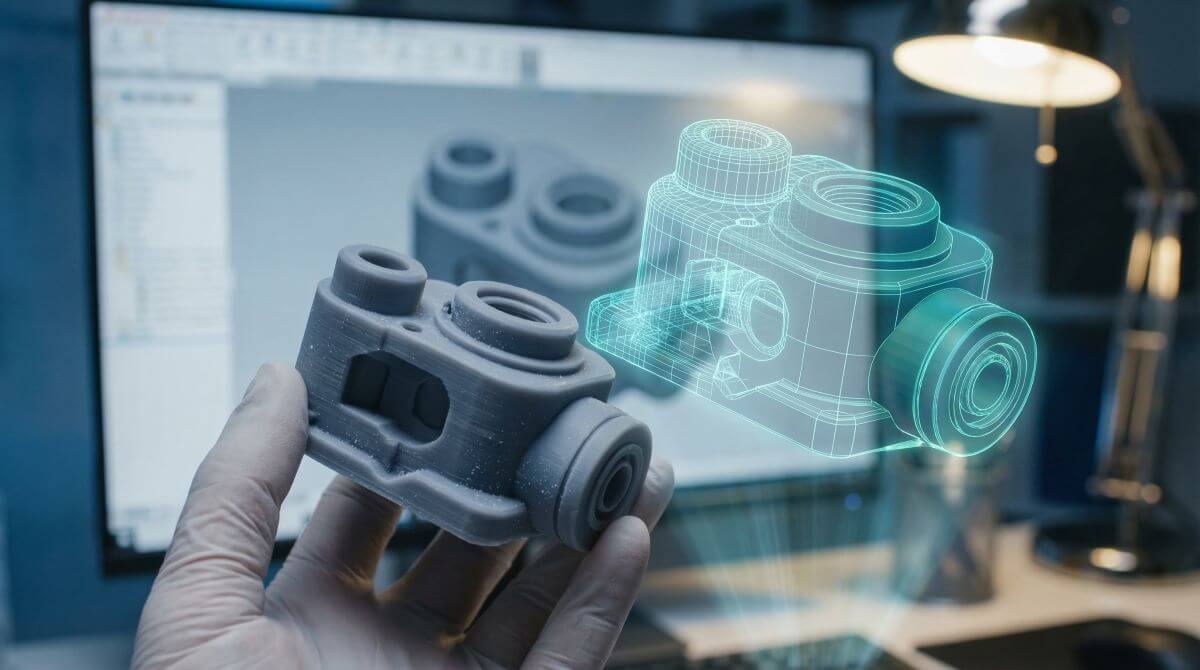
The question comes up on nearly every new program: how many rounds of plastic prototyping does it take before you can commit to production tooling? The answer is not a fixed number. It is a function of how much unresolved design risk a program is carrying when the first tool is cut and how systematically that risk gets addressed at each iteration before it becomes a production problem.
KS Manufacturing has run plastic injection molding programs for medical device, electronics, and automotive OEM customers from its San Leandro, CA, facility since 1974. The programs that reach production in the fewest iterations share a consistent characteristic: the design work that most commonly drives repeat iterations, wall thickness problems, unsupported draft angles, gate location conflicts, and resin compatibility gaps get resolved before tooling begins rather than through tooling cycles. Programs that skip pre-production analysis and use prototyping as the primary mechanism for discovering design issues reliably require more iterations and spend more on tooling corrections than the analysis would have cost.
Understanding what drives iteration count, what each prototype phase is actually equipped to validate, and what evidence is needed before production commitment gives program managers a framework for scoping the prototyping process from the start rather than discovering how many rounds it takes after the budget is spent.
What Drives Iteration Count in a Plastic Injection Molding Program
Iteration count is not random. Each additional prototype cycle in a plastic injection molding program traces back to a question that a prior phase of analysis did not answer. The three most common drivers are design problems that reached tooling unresolved, process variables that were not characterized before the first shot, and specification changes introduced mid-program by stakeholders who were not engaged during the design phase.
How Design Problems Could Arise During DFM
Design problems that survive DFM review are the largest single driver of repeat iterations. Wall thickness that is too uniform to cool without sink, draft angles insufficient for clean ejection, rib geometry that creates stress concentrators, and gate locations that produce weld lines in structurally critical areas. Each of these produces a defect in the prototype that requires a tooling modification before the next iteration can begin. KS Manufacturing’s engineering team performs documented DFM review before any tool is fabricated, specifically to resolve these conditions before they are machined into steel. A wall thickness correction identified in a CAD file costs hours. The same correction identified in a T1 shot requires steel rework that adds weeks and a material cost that DFM review eliminates entirely.
How Process Variables are Characterized
Process variables that are not characterized before the first shot produce dimensional variation and cosmetic defects that look like design problems but are actually process problems. Mold fill imbalances, cooling non-uniformity, and packing pressure that is either insufficient to compensate for shrink or excessive enough to cause flash. These conditions affect what the prototype looks like and whether it passes dimensional inspection, but they are addressable through process development rather than tooling changes. Programs that run T1 shots without a documented process development plan often iterate on tooling to fix problems that process adjustments would have resolved without touching the steel.
How Specification Changes Can Affect Prototype Tooling
Specification changes introduced after tooling begins are a distinct driver that has nothing to do with design quality and everything to do with program governance. When a stakeholder approves a color, material grade, or dimensional tolerance after the first prototype round and then changes that specification in response to what the prototype reveals, it resets part of the validation sequence. These iterations are not engineering failures; they are the cost of a review process that engages decision-makers too late. Programs that conduct formal design reviews with all specification owners before tooling is purchased avoid most of this category of iteration.
What Each Prototype Phase in Plastic Injection Molding Actually Validates
Prototype phases are not interchangeable. Each uses a different tooling type, costs a different amount, and answers a specific category of question. Using a phase to answer a question it is not equipped to answer reliably — running a 3D-printed part through structural testing, or expecting dimensional Cpk data from an aluminum prototype tool — produces conclusions that do not transfer to production and can mislead the program into premature production commitment.
The three phases most plastic injection molding programs work through are concept validation, functional and process validation, and production readiness validation.
How Concept Validation Works for Prototyping
Concept validation uses 3D-printed parts, machined samples, or soft prototype tooling to answer basic feasibility questions. Does the geometry assemble as intended? Does the part fit the surrounding components? Are there obvious feature conflicts or ergonomic problems? Concept validation prototypes are not meant to represent production material properties or production surface finish. They are meant to confirm that the geometry is worth investing in more precise tooling. Treating 3D-printed concept prototypes as functional test specimens introduces risk because printed thermoplastics do not behave the same as injection-molded thermoplastics under load, temperature cycling, or chemical exposure. KS Manufacturing’s engineering team distinguishes explicitly between what concept prototypes can confirm and what they cannot, to prevent programs from building false confidence on 3D-print performance data.
How Functional and Process Validation Works
Functional and process validation uses aluminum or soft-steel prototype tooling that replicates the production gating, cooling, and ejection strategy to produce actual injection-molded parts in the production resin. This phase answers the questions that matter most before committing to hardened production steel: does the part fill completely without voids or short shots, does the cooling layout produce acceptable cycle time without warping the part, does the ejection strategy release the part cleanly, and does the production resin deliver the mechanical properties the design requires? Process development work done during this phase, establishing stable injection parameters and documenting the process window, directly reduces the T1 validation time on the production tool. Programs that skip functional prototype tooling and go directly to production steel carry all of these questions into a much more expensive tooling investment and have fewer options if the answers require steel changes.
How Production Readiness Validation Works
Production readiness validation uses the production tool itself, typically the T1 and T2 shot sequence, to confirm that the hardened steel produces parts meeting the approved part print under documented production conditions. This phase is not for discovering design problems; you should resolve those before making this investment. Production readiness validation confirms dimensional output against tolerance, establishes that process parameters deliver capable, repeatable results across the expected production conditions, and generates the first article inspection data that KS Manufacturing’s ISO 9001 and ISO 13485 quality systems require before a tool is released to production. A program that arrives at T1 with resolved design and process questions completes this phase in one to two iterations. A program that arrives at T1 with open geometry questions, unconfirmed material specifications, or undocumented process parameters uses production tooling to answer questions that earlier phases should have closed.
What Factors Push Iteration Count Higher and How to Control Them
Knowing what drives iteration count creates the opportunity to manage it. The factors below have the most consistent effect on how many rounds a program requires, and each has a specific control that reduces its impact.
| Factor | How It Increases Iteration Count | How to Control It |
|---|---|---|
| DFM review skipped or incomplete | Design problems enter tooling and require steel corrections before the next iteration can produce valid test results | Complete documented DFM review covering wall thickness, draft, rib geometry, gate location, and ejection strategy before tooling PO is placed |
| Mold flow simulation not performed | Fill, weld line, and cooling problems found in T1 shots require tooling modifications | Run simulation before tooling fabrication; resolve fill and cooling issues in software |
| Resin not confirmed before first tool | Material switch mid-program may require steel grade change or tool rebuild if abrasive resin is introduced after soft tooling is built | Lock resin specification as part of tooling kickoff documentation |
| Process development not done before T1 | Dimensional variation attributed to design problems is actually process variation; tooling is modified when process adjustment would have resolved it | Conduct process development on functional prototype tooling before committing to production steel |
| Specification changes after tooling starts | Approved changes require re-validation of already-completed prototype work | Formal design review with all specification owners before tooling purchase; change control process for any post-start modifications |
| Regulatory requirements not scoped upfront | Medical device and other regulated programs require validation protocols that define what the prototype must demonstrate; discovering this late adds validation rounds | For ISO 13485-governed programs, define the validation requirements before prototyping begins |
KS Manufacturing’s ISO 13485 certification covers medical device programs specifically because the validation requirements for regulated products affect how each prototype phase must be documented and what evidence is required before the next phase begins. Programs that scope these requirements at the start build the documentation structure into the prototype sequence rather than retrofitting it after parts have already been made.
How to Recognize When a Program Is Ready to Commit to Production
The clearest signal that a program has completed prototyping is not that the most recent prototype looks good. It is that the questions the prototyping process was designed to answer have been answered with documented evidence, and no open design, process, or specification questions remain that production tooling would need to resolve.
The following conditions, taken together, represent production readiness for a plastic injection molding program:
Dimensional Output
Dimensional output from the prototype tooling falls within the approved part print tolerances on all critical dimensions, confirmed by CMM measurement rather than visual inspection. KS Manufacturing’s in-house CMM capability allows post-prototype dimensional verification at the same facility where production will run, which keeps the measurement baseline consistent across the validation sequence and the production run.
Process Parameters
Process parameters are documented and the process window is understood — meaning the team knows how much variation in melt temperature, injection speed, or holding pressure the process can tolerate before part quality degrades. A process that is stable only at a single set of parameters is not ready for production; it will produce quality escapes whenever conditions drift. A process with a characterized window can be monitored and controlled.
Prototype Iterations
No open engineering change orders exist against the design. Prototype iterations create design changes. Each design change that is not incorporated into the validated prototype requires another validation cycle before it can be confirmed in production. Programs that close all ECOs before committing to production steel avoid discovering mid-run that the approved print does not match what was validated.
The First Article
The first article inspection has been completed and accepted. First article inspection is the formal documentation that the production tool, running under production conditions, produces parts that meet all requirements on the approved drawing. For KS Manufacturing programs, FAI is a required step before a tool is released to production under both the ISO 9001 and ISO 13485 quality systems.
What This Means When Evaluating a Plastic Injection Molding Partner
The prototype iteration process a contract molder uses reflects how the supplier manages design risk across the program. These questions identify whether a molder’s approach will compress iteration count or extend it:
- Does the molder perform documented DFM review before tooling, and do they provide written findings? A verbal DFM conversation does not produce a record the program team can act on. A written DFM report with specific findings, identified risks, and recommended design changes creates a gate that the design must pass through before steel is cut.
- Does the molder run mold flow simulation as a standard pre-tooling step? Simulation performed before fabrication resolves fill and cooling problems at no tooling cost. A molder that treats simulation as optional is leaving a category of iteration risk unaddressed at the cheapest point in the program to resolve it.
- Does the molder distinguish between prototype tooling phases, and can they support aluminum prototype tooling as well as production steel? A molder that only offers production tooling is forcing programs to use production steel to answer questions that functional prototype tooling would resolve at lower cost and in less time.
- For regulated programs, does the molder’s quality system support the validation documentation requirements of the program’s regulatory pathway? ISO 13485 certification is the relevant standard for medical device programs. A molder without ISO 13485 certification cannot provide the quality system infrastructure that FDA-regulated programs require, which means the customer must build that infrastructure independently for every device KS Manufacturing produces under its ISO 13485 system.
- Does the molder have in-house CMM capability for prototype dimensional verification? Dimensional data produced by the same measurement equipment and the same measurement process that will be used in production provides a valid baseline for assessing production capability. Dimensional data produced by different equipment at an outside inspection house introduces measurement system variation that can obscure whether a part change or a measurement change is responsible for a dimensional shift between iterations.
Plastic Prototype Iteration Principles for Injection Molding Programs
| Principle | What It Means in Practice | How KS Manufacturing Applies This |
|---|---|---|
| Iteration count is determined by unresolved risk at tooling start | Programs that resolve design and process questions before tooling begins require fewer iterations than programs that use tooling to discover those answers | DFM review and mold flow simulation are completed before any tooling PO is issued; findings are documented and resolved before fabrication begins |
| Each prototype phase answers a specific category of question | Concept, functional, and production readiness validation are not interchangeable; using a phase to answer questions it cannot reliably answer produces conclusions that mislead the program | KS Manufacturing scopes each prototype phase explicitly, distinguishing what the tooling type can confirm from what requires the next phase |
| Production commitment requires documented evidence, not visual confidence | A prototype that looks correct has not demonstrated dimensional capability, process stability, or regulatory compliance | First article inspection with CMM measurement is required before any tool is released to production under KS Manufacturing’s ISO 9001 and ISO 13485 quality systems |
| Specification lock before tooling prevents a category of avoidable iteration | Post-start specification changes require re-validation of already-completed prototype work | Resin, tolerances, and cosmetic specifications are confirmed as part of tooling kickoff documentation before steel is ordered |
| In-house toolroom capability keeps iteration turnaround within the production schedule | Outsourced tooling modifications add coordination lead time to every prototype cycle | KS Manufacturing’s San Leandro facility operates an in-house toolroom with CMM inspection capability; tooling corrections between iterations do not require outside vendor coordination |
KS Manufacturing provides plastic injection molding services with in-house tooling capability, custom injection molds, documented DFM review, mold flow simulation, and ISO 9001 and ISO 13485 certification across its San Leandro, CA, and Tijuana facilities. If your program needs a manufacturing partner who can scope the prototyping process correctly from the start and minimize the iterations required to reach production confidence, contact KS Manufacturing’s engineering team to discuss your program requirements.